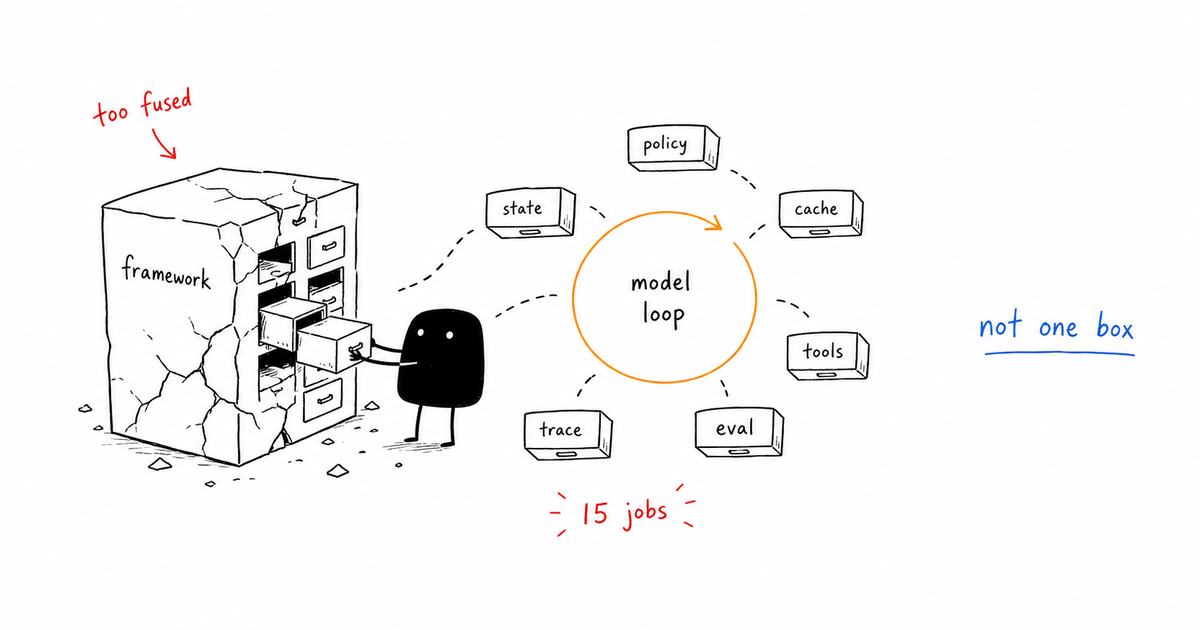
What should stop an AI agent before it takes the wrong action?
The obvious answer is to make the model more careful, add a few logs, and ask for human review when the stakes feel high. That answer is not useless. It is just not a control system.
An agent is not only a model response. It can retrieve private context, call tools, mutate files, send messages, spend budget, and route work across other systems. If the only boundary is a prompt that says “be careful,” the real policy lives in vibes.
AI agent control gates are explicit checks that decide when an agent may continue, when it must gather more evidence, when it must run an eval, when it must downgrade a tool, and when it must stop for human approval.
Direct answer
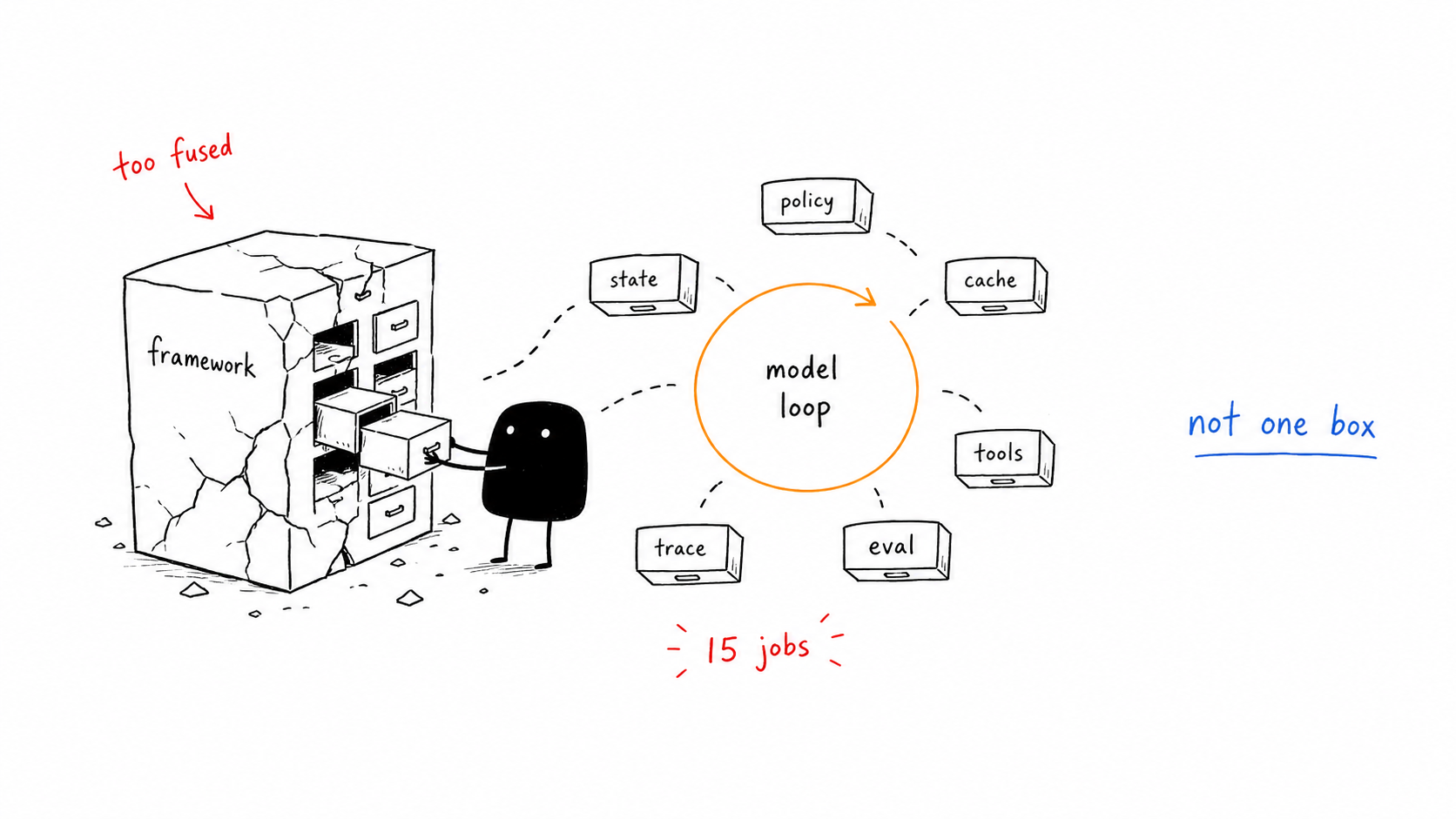
AI agent control gates are runtime or workflow checks that turn agent autonomy into managed production behavior. They sit around model calls, context retrieval, tool execution, cost, security, tracing, evals, and human approval. A gate should not only describe a risk. It should allow, deny, retry, downgrade, or escalate the next action.
The anti-example: a long prompt pretending to be governance
The common version looks responsible:
This is the core shift. Do not ask whether the agent is “safe.” Ask which action is being considered, what evidence supports it, what policy applies, and what should happen next.
The production gate map
An agent control layer usually needs seven gates:
| Gate | Question | Runtime action |
|---|---|---|
| Context gate | Is this context trusted, fresh, and allowed for this task? | Label, redact, reject, or retrieve more evidence |
| Tool gate | Is this tool allowed for this user, task, and risk tier? | Allow, deny, downgrade, or require approval |
| Security gate | Could untrusted input make the agent misuse data or tools? | Isolate, scope, block, or escalate |
| Trace gate | Can the run be reconstructed after failure? | Require trace IDs, spans, and redacted evidence |
| Eval gate | Did the run satisfy task, policy, and grounding checks? | Retry, revise, fail closed, or release |
| Monitoring gate | Are runtime signals crossing a stop threshold? | Throttle, fallback, stop, or page owner |
| Human gate | Does a person need to accept the risk before side effects? | Pause with an approval packet |
Running example: the publishing agent
Imagine an agent that drafts articles, researches sources, edits Markdown, generates images, and publishes to a live site.
A weak system gives it a content prompt, a browser, filesystem access, and a publish command. The agent usually behaves, so the team calls it good.
A gated system treats every stage differently:
- Reading public docs is allowed with source capture.
- Reading private analytics requires workspace identity and trace evidence.
- Editing a draft is allowed inside the repo boundary.
- Publishing is blocked until sources are resolved, the build passes, the diff is reviewable, and approval is recorded.
- After publish, verification must check the live URL, canonical, sitemap, raw Markdown endpoint, image assets, and schema.
The same model can run both systems. Only one has an operating boundary.
How the gates work together
The gates are not separate blog topics pasted into one checklist. They form a chain.
Security without tracing cannot prove what happened. Tracing without evals records bad work beautifully. Evals without monitoring catch test failures but miss runtime drift. Human approval without evidence turns reviewers into rubber stamps. Prompt caching without evals can make the agent cheaper and stale at the same time.
The useful question is:
If a gate only creates a dashboard tile, it is not a gate. It is a signal. Signals become gates when they alter execution.
Which control gate to use first
Use the cluster like an operating map:
| If the problem is… | Start with… | Why |
|---|---|---|
| You cannot explain agent failures | Agent Observability | Build the evidence layer first |
| You have logs but no causal chain | Agent Tracing | Link model, tool, policy, and approval spans |
| Agents can call risky tools | AI Agent Security | Scope the execution boundary |
| MCP servers expose private tools | MCP Authentication | Bind identity, scope, and authorization |
| MCP integrations feel too trusted | MCP Security | Review server trust, tokens, scopes, and prompt injection paths |
| You need release confidence | AI Agent Evaluation | Test workflow behavior, not only final text |
| Runtime behavior drifts | AI Agent Monitoring | Convert traces and evals into stop conditions |
| A person must accept risk | Human Approval | Show a decision packet before side effects |
| Costs are rising | Prompt Caching | Separate stable prompt prefix from volatile truth |
Build the first control layer
Do not start with a governance committee. Start with one agent and one risky workflow.
- Inventory the tools the agent can call.
- Classify each tool by side effect: read, write, send, deploy, delete, charge, or admin.
- Add a trace ID to the run and spans around model calls, retrieval, tool calls, guardrails, evals, and approvals.
- Define the first deny rules for destructive or external actions.
- Write three eval cases: happy path, bad context, and risky action.
- Add one monitoring rule that stops repeated tool calls or runaway cost.
- Create an approval packet for the first customer-visible or production-changing action.
Frequently Asked Questions
What is an AI agent control gate?
An AI agent control gate is a check that decides whether an agent can continue, must retry, must collect more evidence, must run an eval, or must stop for human approval. A real gate changes runtime behavior.
Is this the same as observability?
No. Observability explains what happened. A control gate uses that evidence to allow, deny, retry, downgrade, or escalate an action.
Where should teams start?
Start with tool permissions, turn-level traces, one security rule for untrusted context, one eval gate, and one human approval packet for external side effects. That is enough to catch many early production failures.
The Takeaway
The control layer is the real product boundary. The model proposes actions; the gates decide which actions deserve to touch the world.