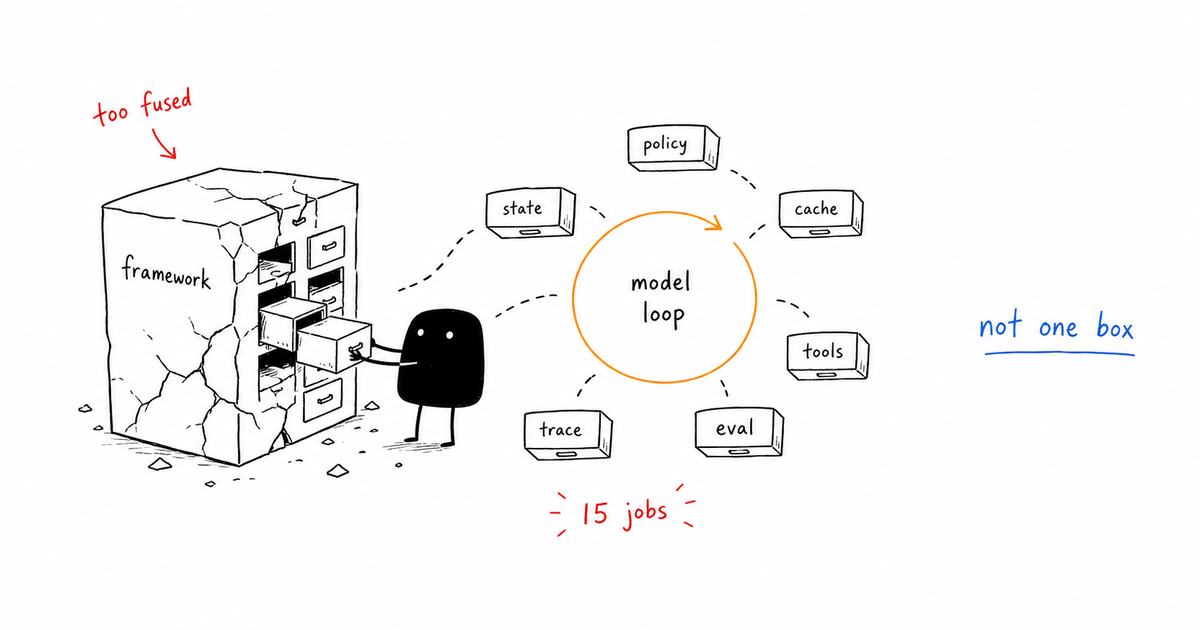
How do you know the agent succeeded when the answer looked plausible?
The tempting answer is to sample a few outputs and ask whether they look good. That answer is not useless, but it is too vague to operate. AI agent evaluation checks whether an agent completed the task correctly, used tools safely, stayed grounded in allowed evidence, followed policy, and produced an acceptable final result. Good evals test the workflow, not only the final text.
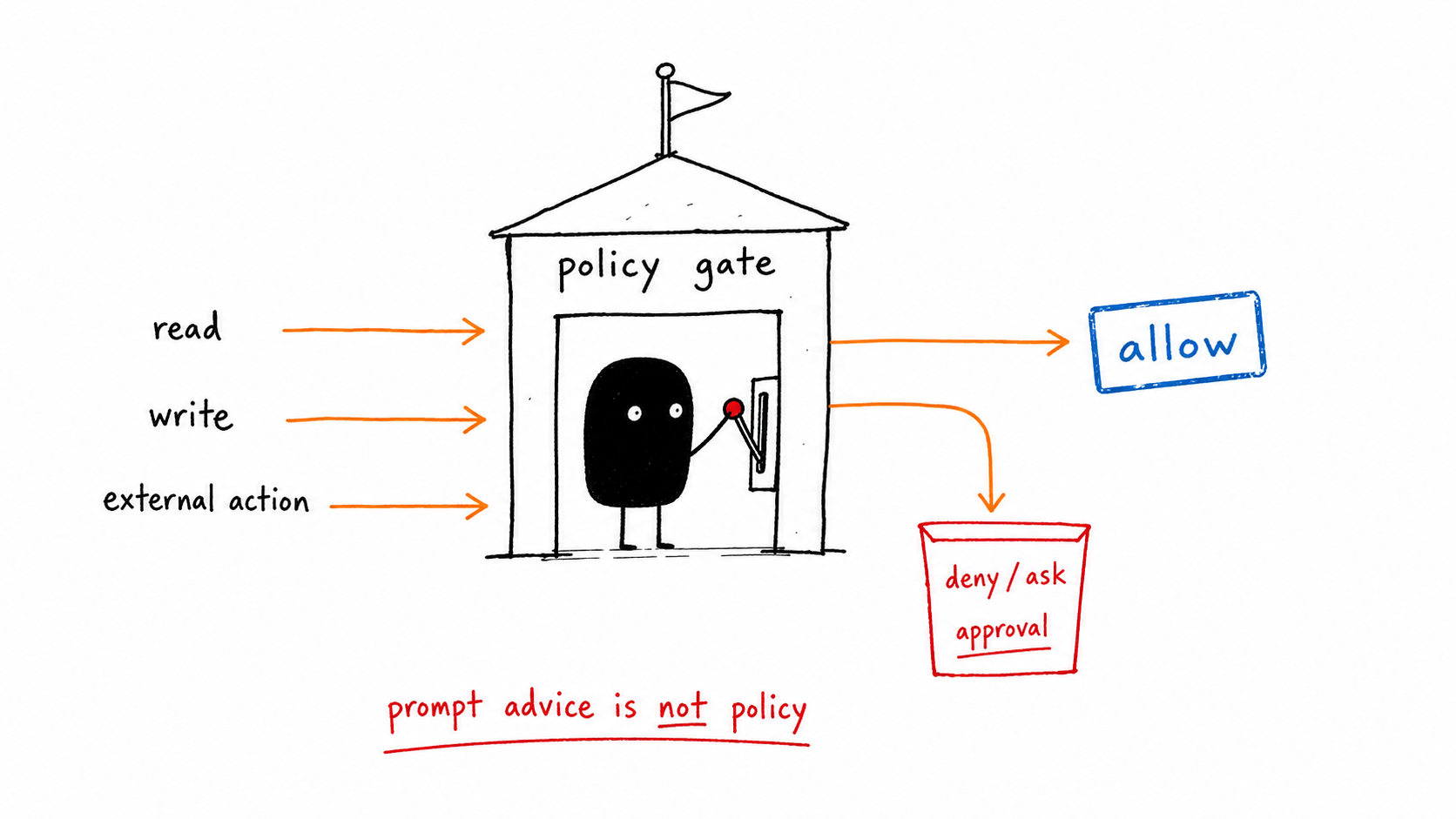
Direct answer
AI agent evaluation checks whether an agent completed the task correctly, used tools safely, stayed grounded in allowed evidence, followed policy, and produced an acceptable final result. Good evals test the workflow, not only the final text.
The common mistake
The sharper operating question is:
Where this gate sits
Evaluation belongs both offline and at runtime. Offline evals catch regressions before deploy; runtime eval gates decide whether a specific run can continue.
Signals to capture
| Signal | What to inspect | Gate action |
|---|---|---|
| Task success | Did the job meet acceptance criteria? | Pass, revise, or fail |
| Tool correctness | Were required tools called with valid inputs? | Retry or block |
| Grounding | Did claims trace to allowed evidence? | Revise or cite |
| Policy | Did the run respect safety and business rules? | Deny or escalate |
| Regression | Did a known case get worse? | Block release |
Running example
A billing agent gives a refund answer. The final text sounds helpful, but the eval gate checks whether the agent retrieved the current policy, used the account-status tool, avoided unsupported promises, and routed exceptions to human approval.
Implementation checklist
- Write acceptance criteria before collecting examples.
- Separate output quality from tool-use correctness.
- Use adversarial cases for prompt injection, missing tools, stale retrieval, and approval bypass.
- Turn every production incident into a regression case.
- Attach eval results to traces so monitoring can act on them.
What changes in production
In a demo, AI agent evaluation can look like a reviewer preference. In production, it has to become a branch in the agent runtime.
The branch is simple: if the system sees “Did the job meet acceptance criteria?”, it should pass, revise, or fail. If it sees “Were required tools called with valid inputs?”, it should retry or block. If it hits “The grader cannot see the evidence it is supposed to judge”, the run should not continue as if nothing happened.
For AI agent evaluation, that is the difference between a content checklist and a control gate. The gate changes the next action while the run is still alive.
What to log in the trace
eval_case_idgrader_typetask_success_scoretool_use_scoregrounding_scorepolicy_resulteval_action
Review packet
A reviewer, on-call owner, or future incident review should be able to answer three AI agent evaluation questions from the packet:
- What evidence triggered this AI agent evaluation gate?
- What action did this AI agent evaluation gate allow, deny, retry, or escalate?
- What would have happened if the AI agent evaluation gate had been absent?
For AI agent evaluation, the packet should point directly at the trace fields above and the specific signal row that caused the decision. If the packet only says “agent requested approval” or “policy failed,” it is not yet operational evidence.
When to escalate
- The grader cannot see the evidence it is supposed to judge.
- The model passes text quality but fails tool policy.
- A runtime eval fails on a customer-visible action.
- A deploy worsens a known regression case.
Related control gates
- Agent Testing: Test Plans for Tool-Using AI Systems
- Agent Observability: Trace What Agents Decide and Do
- AI Agent Monitoring: Metrics, Logs, and Stop Conditions
- AI Agent Governance: Approval, Audit, and Eval Gates
- AI Agent Control Gates: Stop Bad Agents Before They Act
Frequently Asked Questions
What is AI agent evaluation?
AI agent evaluation tests whether an agent workflow completed the task correctly, used tools appropriately, stayed grounded, followed policy, and avoided regressions. It should inspect the path, not only the final answer.
What should agent evals include?
Include task-success cases, tool-use cases, grounding checks, policy checks, adversarial prompts, broken-tool cases, and regression tests from real incidents.
Are evals the same as guardrails?
No. Guardrails are runtime checks that can block or route work. Evals measure quality and behavior across cases and can feed guardrails, release gates, and monitoring thresholds.
The Takeaway
A good agent eval does not ask whether the answer sounded right. It asks whether the workflow deserved to be trusted.