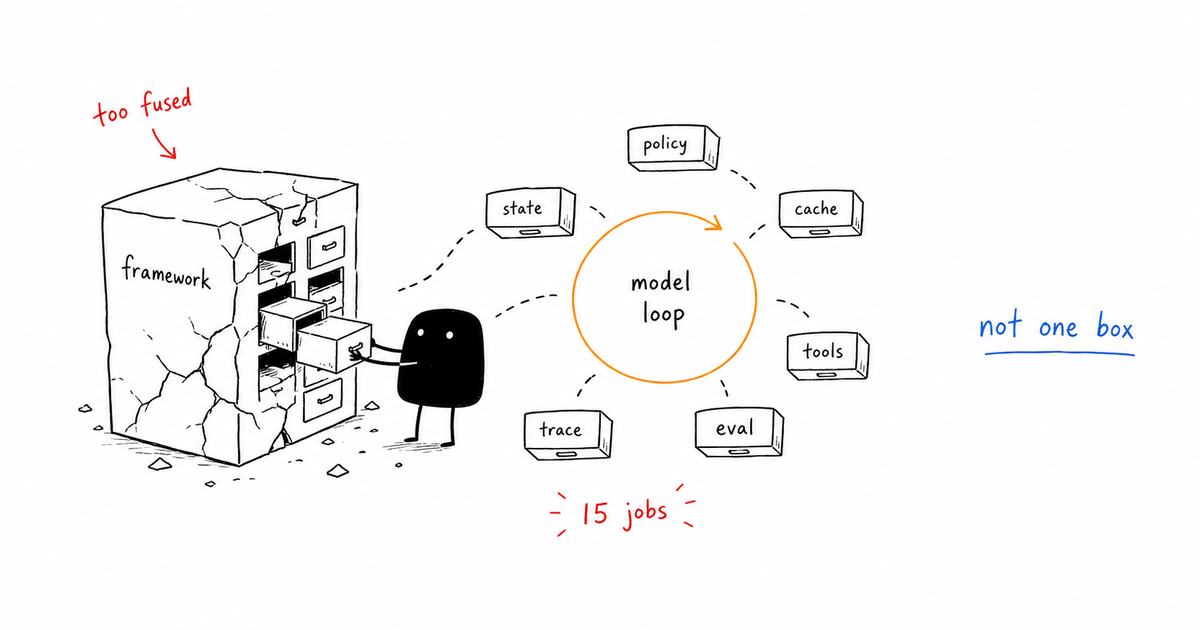
Who owns the decision when an agent makes the wrong one?
The tempting answer is to write a policy doc and require human review for risky workflows. That answer is not useless, but it is too vague to operate. AI agent governance defines owners, risk tiers, tool permissions, approval rules, eval gates, monitoring thresholds, audit evidence, and incident review for production agents. The useful version turns policy into runtime controls.
Direct answer
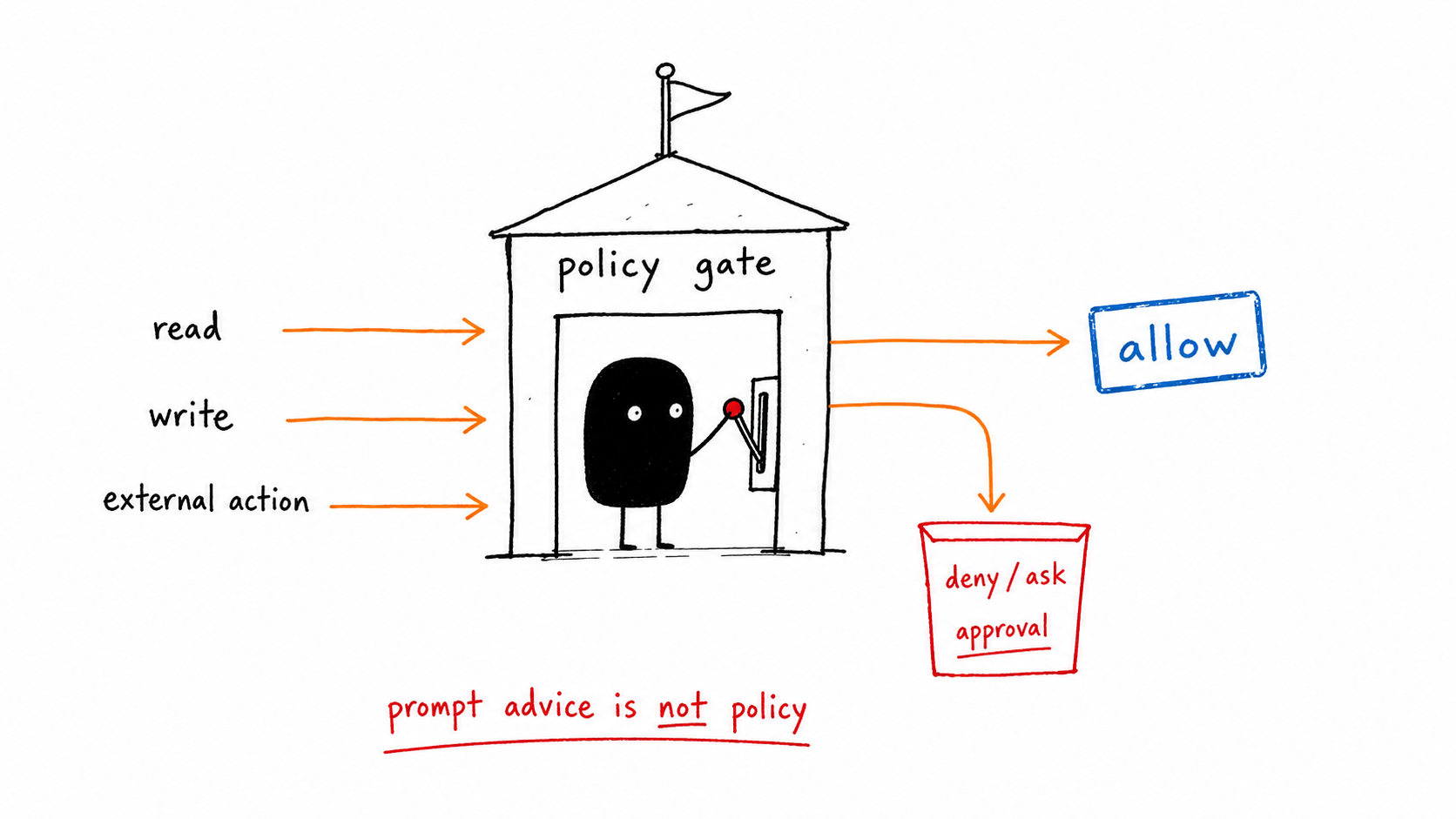
AI agent governance defines owners, risk tiers, tool permissions, approval rules, eval gates, monitoring thresholds, audit evidence, and incident review for production agents. The useful version turns policy into runtime controls.
The common mistake
The sharper operating question is:
Where this gate sits
Governance sits above individual gates and connects them into an operating system. It decides ownership and policy; the runtime gates enforce that policy.
Signals to capture
| Signal | What to inspect | Gate action |
|---|---|---|
| Owner | Team, service owner, reviewer | Assign accountability |
| Risk tier | Read-only, internal write, external send, regulated | Choose controls |
| Tool class | Data, mutation, deployment, payment | Limit access |
| Evidence | Trace, eval, approval, incident | Audit decisions |
| Exception | Manual override or policy waiver | Expire and review |
Running example
A sales agent can draft outbound emails, but governance says it cannot send to prospects without approval, cannot access billing data, and must pass an eval for unsupported claims. The policy is useful because each rule maps to a runtime gate.
Implementation checklist
- Create risk tiers based on side effects, not team optimism.
- Assign owners for agents, tools, policies, evals, and incident response.
- Make release gates block deployments when required evals fail.
- Set approval requirements by action class and audience.
- Review exceptions with expiry dates instead of permanent waivers.
What changes in production
In a demo, AI agent governance can look like a reviewer preference. In production, it has to become a branch in the agent runtime.
The branch is simple: if the system sees “Team, service owner, reviewer”, it should assign accountability. If it sees “Read-only, internal write, external send, regulated”, it should choose controls. If it hits “No owner can approve a policy exception”, the run should not continue as if nothing happened.
For AI agent governance, that is the difference between a content checklist and a control gate. The gate changes the next action while the run is still alive.
What to log in the trace
agent_ownerrisk_tierpolicy_versionrelease_eval_statusapproval_policy_idexception_id
Review packet
A reviewer, on-call owner, or future incident review should be able to answer three AI agent governance questions from the packet:
- What evidence triggered this AI agent governance gate?
- What action did this AI agent governance gate allow, deny, retry, or escalate?
- What would have happened if the AI agent governance gate had been absent?
For AI agent governance, the packet should point directly at the trace fields above and the specific signal row that caused the decision. If the packet only says “agent requested approval” or “policy failed,” it is not yet operational evidence.
When to escalate
- No owner can approve a policy exception.
- A high-risk tool has no mapped risk tier.
- Release goes live with failing evals and no waiver.
- Incident review cannot connect the run to policy and owner.
Related control gates
- AI Agent Security: Threat Models for Tool-Using Agents
- AI Agent Evaluation: Gates That Catch Bad Behavior
- Human Approval for AI Agents: When Agents Should Stop
- Agent Tracing: A Practical Schema for Tool-Using AI
- AI Agent Control Gates: Stop Bad Agents Before They Act
Frequently Asked Questions
What is AI agent governance?
AI agent governance is the ownership and control system for production agents: risk tiers, tool permissions, eval gates, monitoring thresholds, approvals, audit evidence, and incident review.
How is governance different from security?
Security limits what the agent can access and change. Governance decides who owns the agent, which risks are acceptable, which controls are required, and how exceptions are reviewed.
Where should governance start?
Start with an agent inventory, risk tiers by side effect, tool-permission owners, required evals, and approval policies for customer-visible or destructive actions.
The Takeaway
Governance is only real when it changes what the agent can do at runtime.