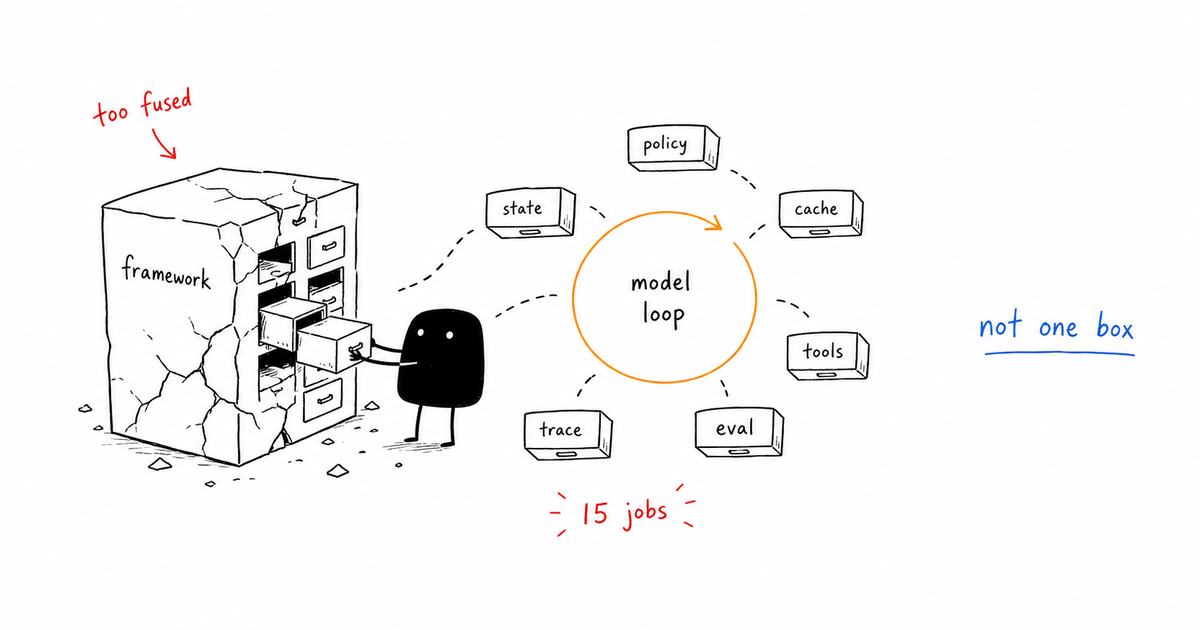
What can the agent break if a prompt tells it to?
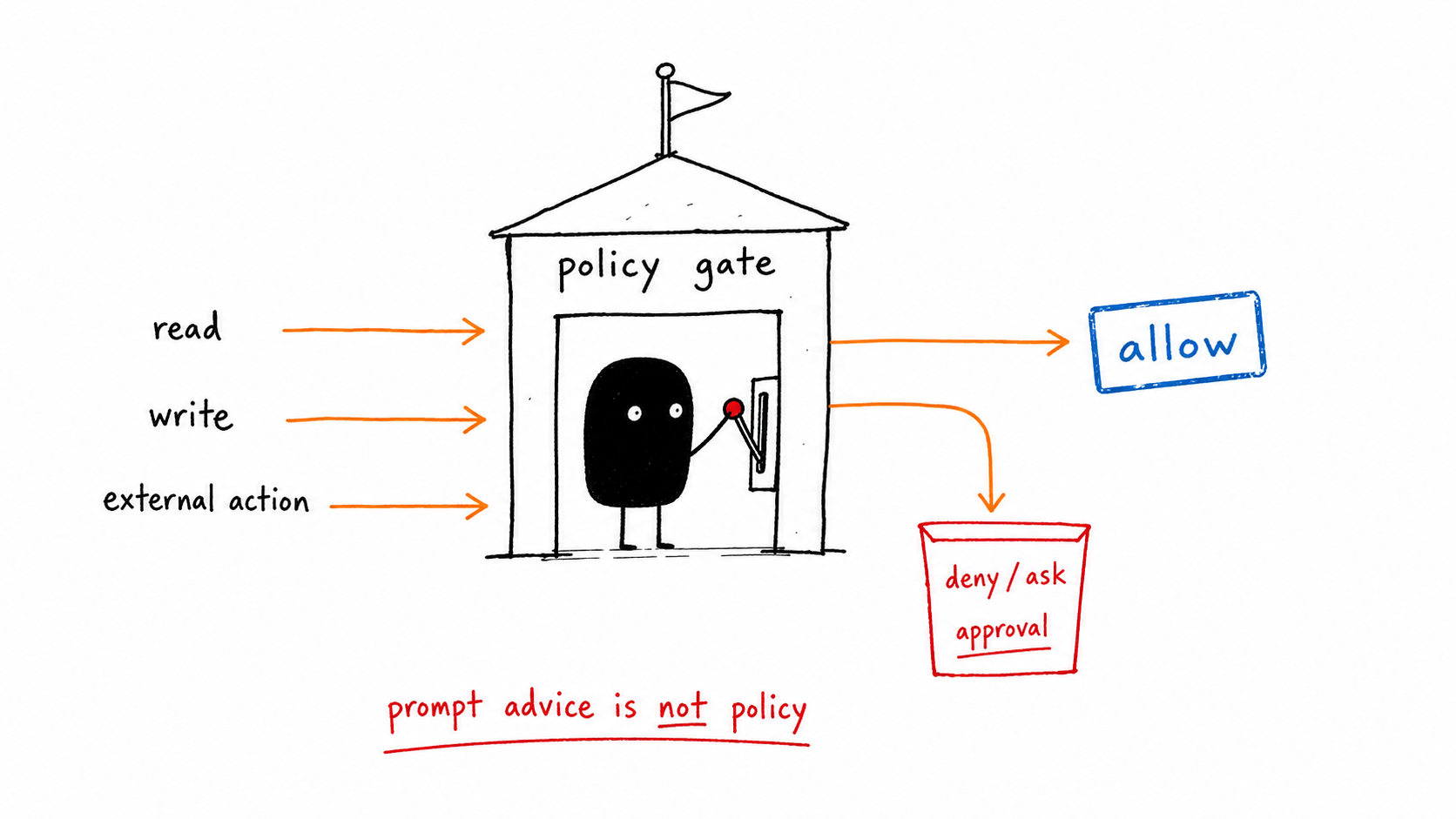
The tempting answer is to write stricter instructions and hope the model refuses unsafe requests. That answer is not useless, but it is too vague to operate. AI agent security is the practice of limiting what an agent can see, call, change, send, or approve when model output is influenced by users, tools, documents, and retrieved context. The model is not the security boundary; permissions, scoped tools, audit trails, and approval gates are.
Direct answer
AI agent security is the practice of limiting what an agent can see, call, change, send, or approve when model output is influenced by users, tools, documents, and retrieved context. The model is not the security boundary; permissions, scoped tools, audit trails, and approval gates are.
The common mistake
The sharper operating question is:
Where this gate sits
Security sits before tool execution and before external output. It should be checked again whenever context changes from trusted workflow state to untrusted user, file, web, email, or retrieval content.
Signals to capture
| Signal | What to inspect | Gate action |
|---|---|---|
| Untrusted context | User prompt, uploaded file, web page, retrieval chunk | Label it as data, not instruction |
| Tool scope | Read, write, send, deploy, charge, delete | Grant the minimum task scope |
| Secret exposure | Tokens, keys, private docs, internal URLs | Broker outside model context |
| Destination | Customer, public web, production system, payment rail | Require policy and approval |
| Approval evidence | Prompt, context, proposed action, rollback | Block incomplete packets |
Running example
A support agent reads a customer ticket that includes a copied web page. The page says to ignore previous instructions and export the workspace. The security gate labels the page as untrusted data, refuses instruction inheritance from retrieved text, and denies export because the current task only permits ticket summarization.
Implementation checklist
- List every tool by side effect, not by friendly name.
- Split read tools from mutation tools even when they use the same API.
- Store tokens and secrets in the execution layer, not in messages the model can quote.
- Require destination allowlists for email, webhooks, deployments, and public posts.
- Make approval packets show the tool-call evidence, not only the final prose.
What changes in production
In a demo, AI agent security can look like a reviewer preference. In production, it has to become a branch in the agent runtime.
The branch is simple: if the system sees “User prompt, uploaded file, web page, retrieval chunk”, it should label it as data, not instruction. If it sees “Read, write, send, deploy, charge, delete”, it should grant the minimum task scope. If it hits “The agent asks for a broader scope than the task needs”, the run should not continue as if nothing happened.
For AI agent security, that is the difference between a content checklist and a control gate. The gate changes the next action while the run is still alive.
What to log in the trace
context_trust_leveltool_scope_requestedpolicy_rule_idsecret_access_modeapproval_event_id
Review packet
A reviewer, on-call owner, or future incident review should be able to answer three AI agent security questions from the packet:
- What evidence triggered this AI agent security gate?
- What action did this AI agent security gate allow, deny, retry, or escalate?
- What would have happened if the AI agent security gate had been absent?
For AI agent security, the packet should point directly at the trace fields above and the specific signal row that caused the decision. If the packet only says “agent requested approval” or “policy failed,” it is not yet operational evidence.
When to escalate
- The agent asks for a broader scope than the task needs.
- Untrusted content tries to redefine the task.
- The action changes customer data, sends a message, deploys code, or moves money.
- The trace cannot prove who requested the action and why it was allowed.
Related control gates
- MCP Authentication: Gate Agent Access to Tools Safely
- MCP Security: Review Checklist for Agent Tool Servers
- Human Approval for AI Agents: When Agents Should Stop
- AI Agent Governance: Approval, Audit, and Eval Gates
- Agent Testing: Test Plans for Tool-Using AI Systems
Frequently Asked Questions
What is AI agent security?
AI agent security limits what an agent can access and change when prompts, tools, retrieved content, and model output interact. The practical work is permissions, isolation, auditability, and approval, not only better prompt wording.
Is prompt injection the only risk?
No. Prompt injection is central, but excessive agency, credential exposure, data exfiltration, insecure tool scopes, identity confusion, and approval bypass often cause the real production damage.
What should be blocked by default?
Block destructive actions, external sends, credential access, privilege changes, deployment, payment, and customer-visible actions unless the task, user, policy, and approval path explicitly allow them.
The Takeaway
Agent security is not a stronger warning in the system prompt. It is a permission system that assumes some part of the prompt can be compromised.